




Rhayader Tunnel
Rhayader Tunnel
The Mid-Wales Railway plotted a circuitous course for 48 miles from an end-on junction with the Llanidloes & Newtown Railway at Penpontbren to Talyllyn Junction, where it joined the Brecon & Merthyr Railway. It was intended to form part of a trunk route connecting the industrial centres of north-west England with the coalfields of south Wales and sea port at Milford Haven, but its ambitions were thwarted by competing Parliamentary proposals whereby 23 miles of line were excluded from the approved scheme. The authorising Act was passed in 1859.
As surveyed, the single track would have a challenging maximum gradient of 1 in 77 and sharpest curve of 30 chains radius. Responsible for the engineering were brothers Benjamin and Robert Piercy who were pivotal in developing the railway network of north and mid-Wales. Mr Atkinson fulfilled the role of resident engineer, with help from Messrs Wilson, Donaldson and Parkinson who individually managed specific sections of the line.
The first sod was cut on 2nd September 1859 in a field close to Rhayader by Mrs Pyne, a descendent of James Watt, the renowned Scottish inventor, engineer and chemist. She was presented with a spade and wheelbarrow by Messrs David Davies and Thomas Savin, the original contractors. Newspaper reports describe the crowd of 300 people contending with miserable weather, the colourful lunchtime procession taking place “amid the pelting of the pitiless storm”.
The company found it impossible to raise the subscriptions for construction so the contractors accepted shares to cover most of their payment. However, Davies and Savin fell out before work had actually started, with Alexander Thomas Gordon taking over the project. But very little work was undertaken due to ongoing financial difficulties and replacement contractors, Messrs James Overend and John Watson, were appointed on 26th March 1862 to push the job forward.
For much of its length, the railway followed the valleys of the Marteg, Wye and Llynfi rivers. Consequently, the requisite works were comparatively easy, the exception being a number of extensive rock cuttings, a great number of bridges and two tunnels.
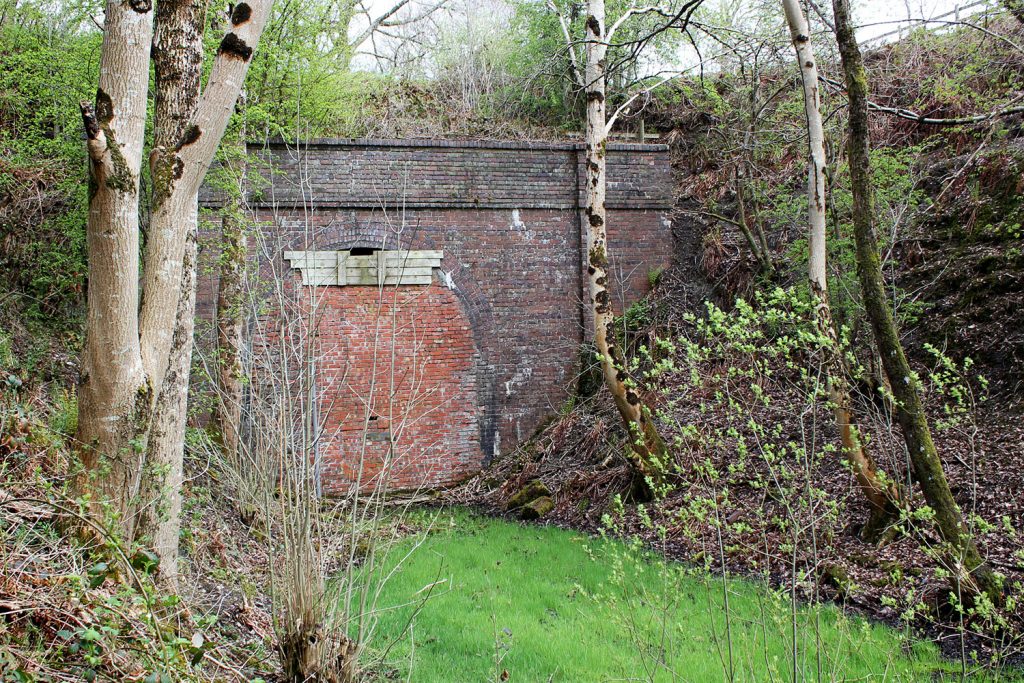
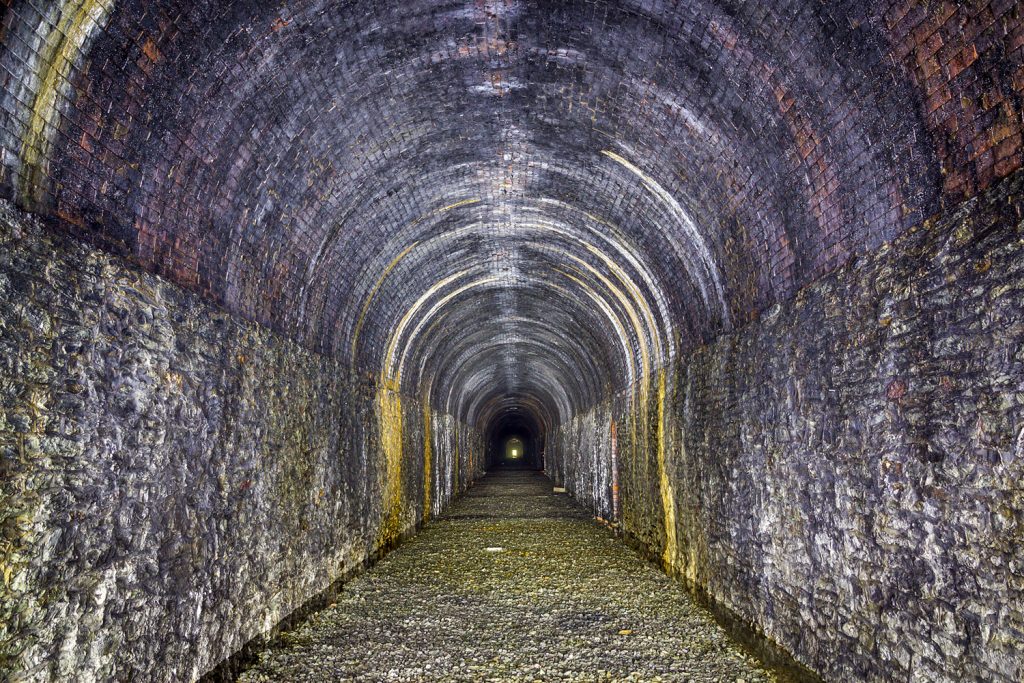
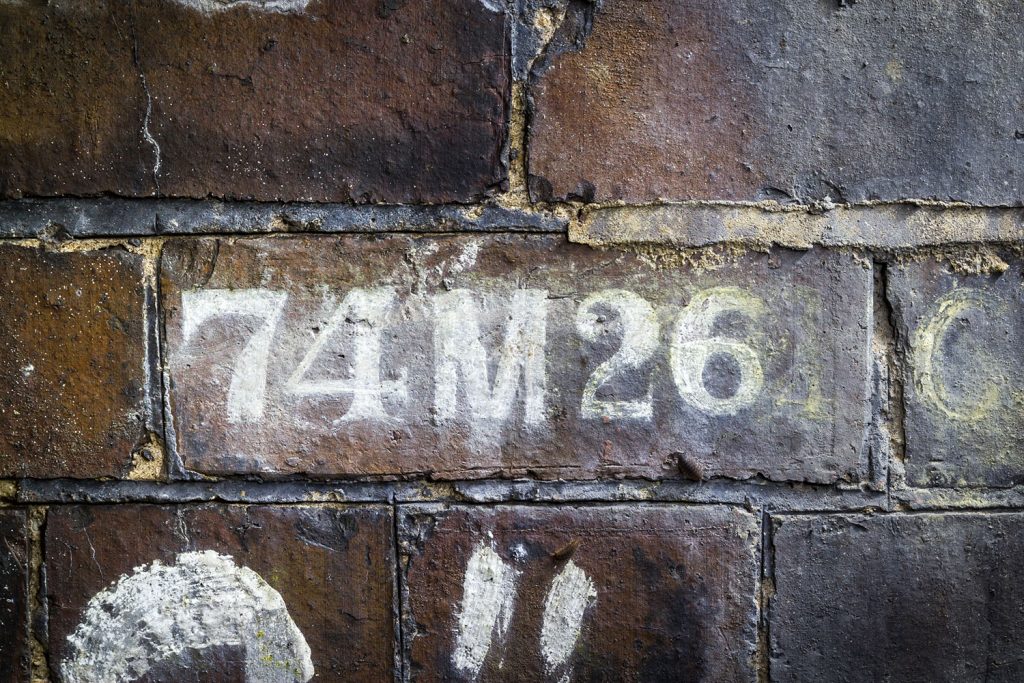
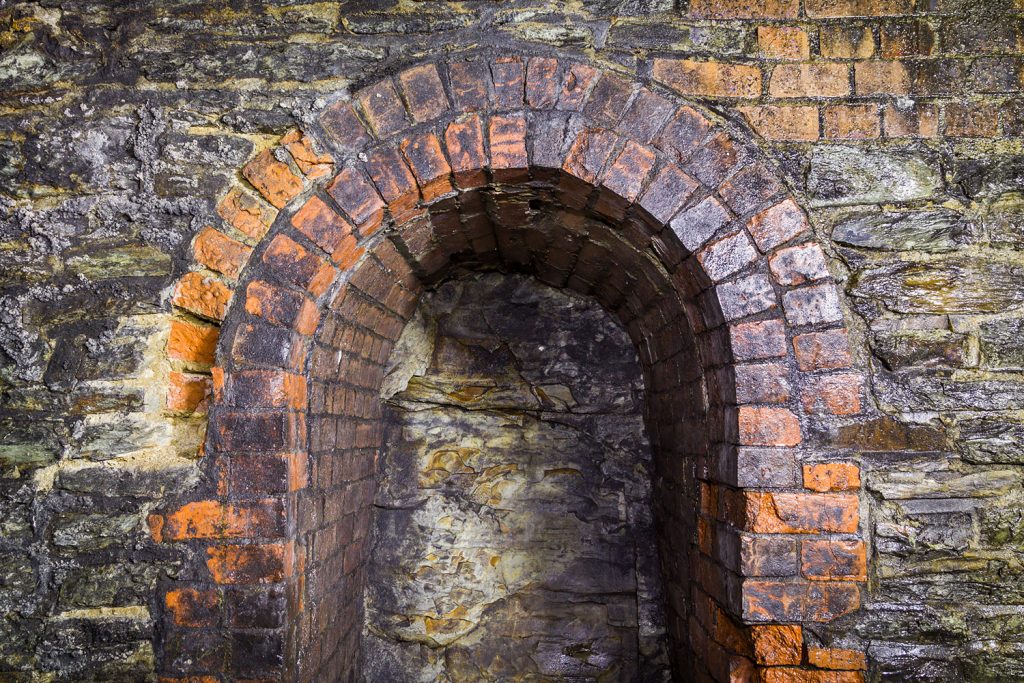
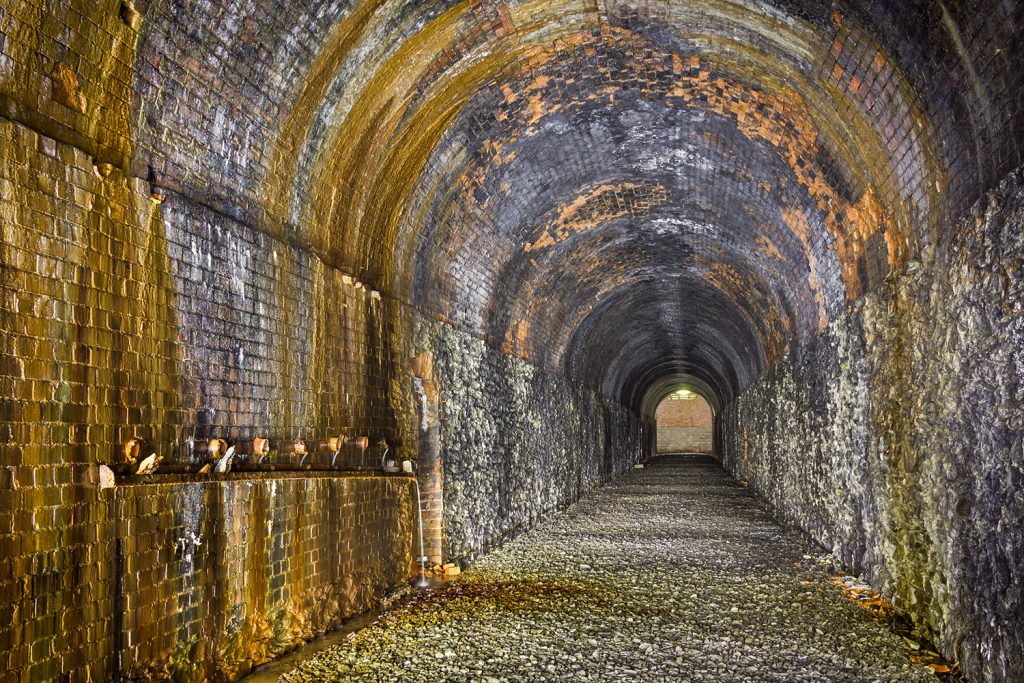
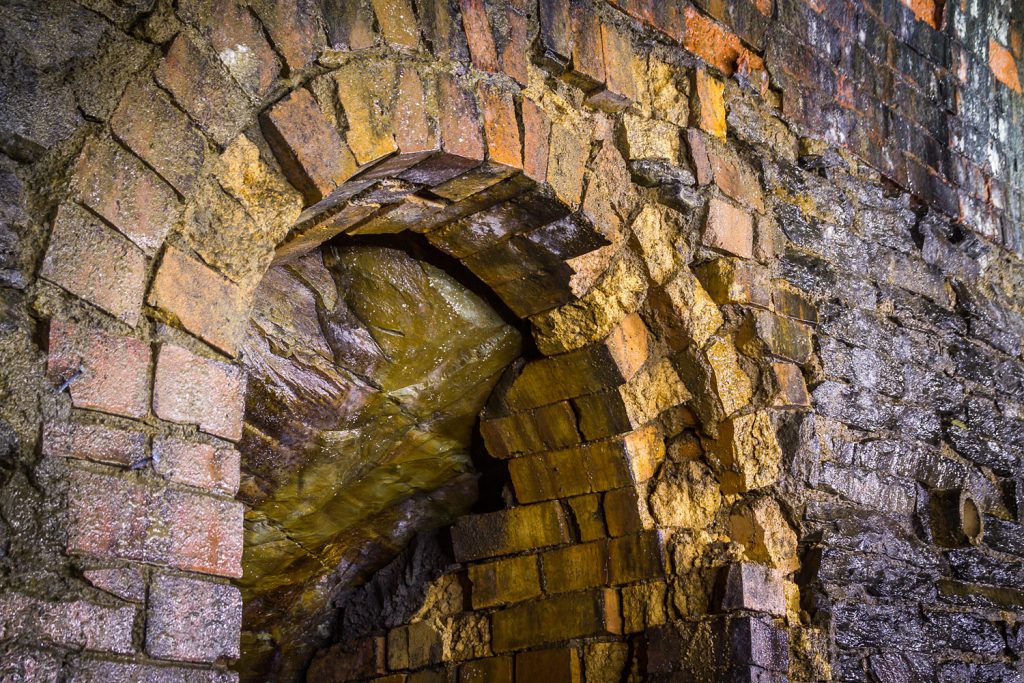
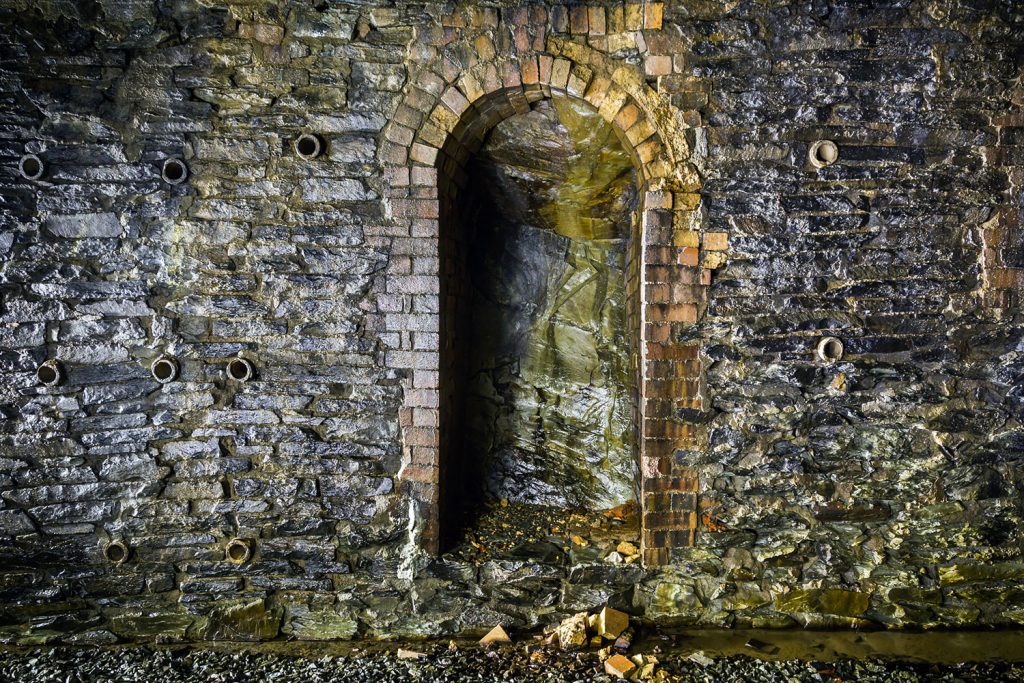
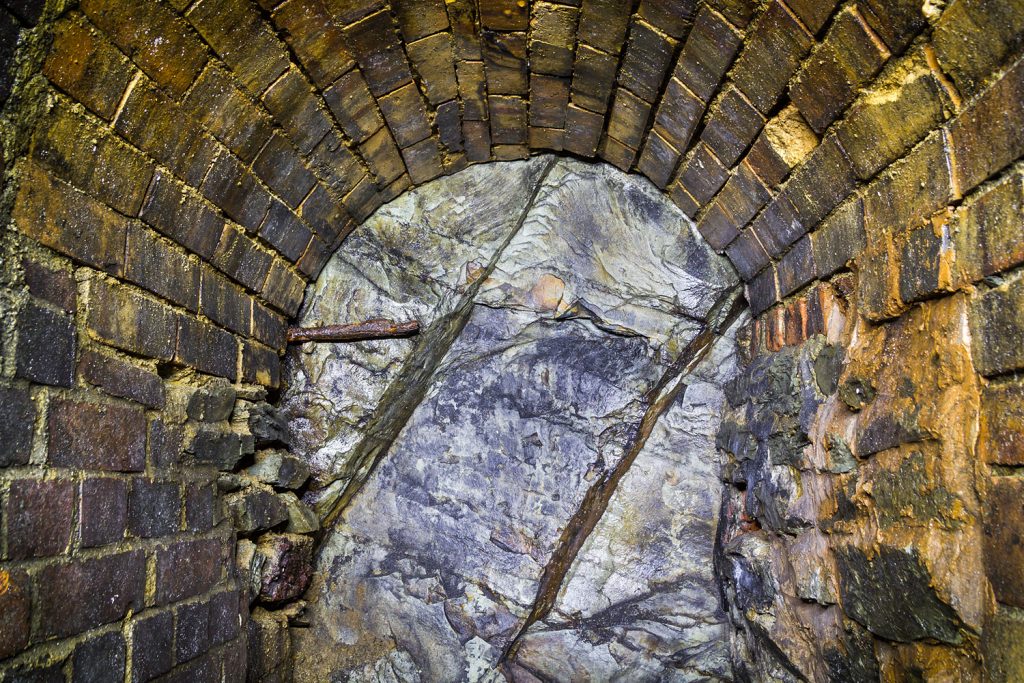
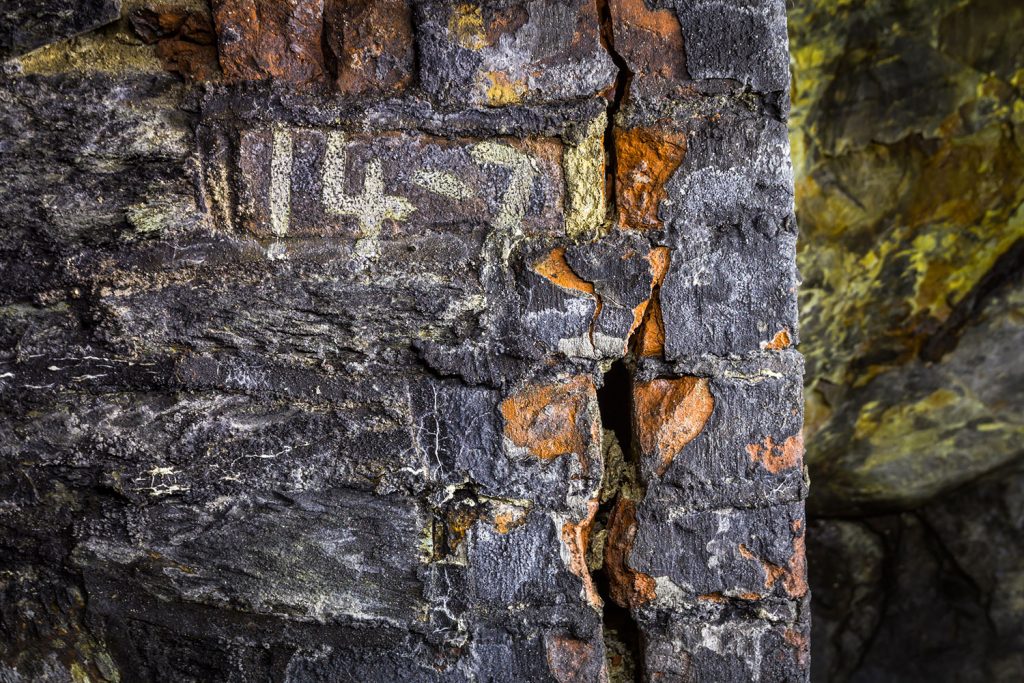
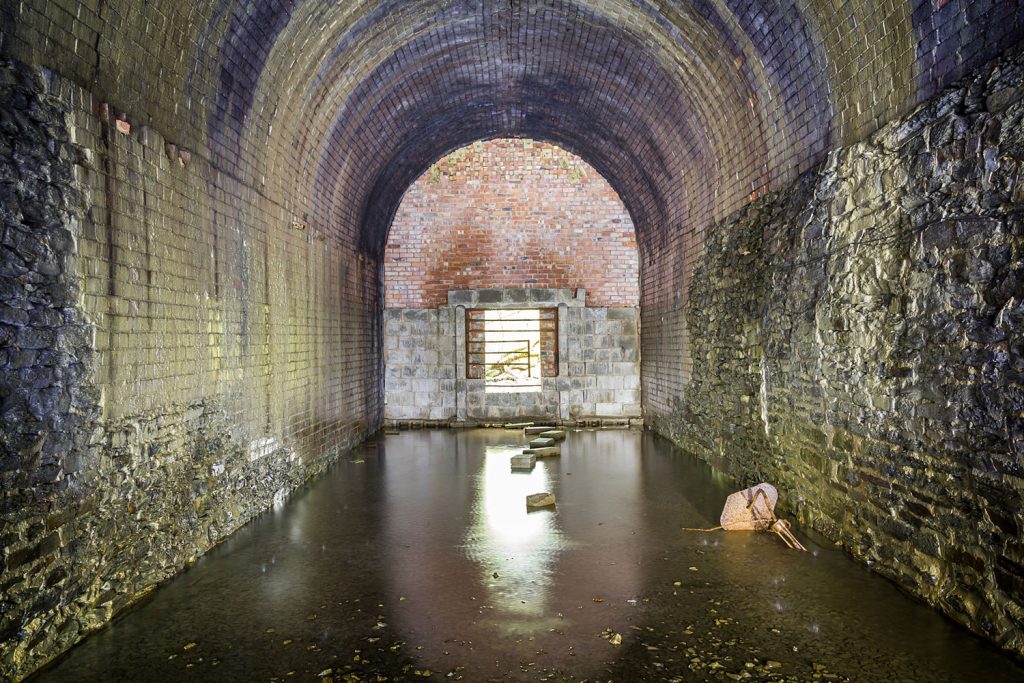
The shorter of these tunnels (MLT/74m 14ch) is located just to the south of Rhayader. It measures 271 yards in length. It is lined throughout with rubble masonry sidewalls in lime mortar and a brick arch. Refuges are provided at nominal intervals of 22 yards (1 chain), alternating between sidewalls.
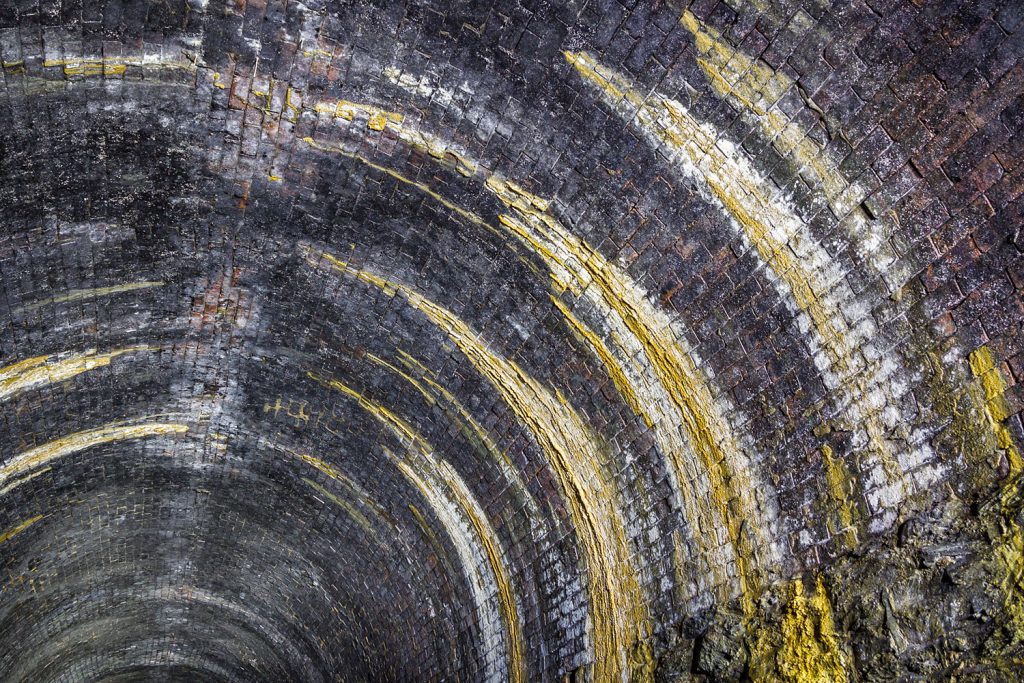
The tunnel was driven through mudstone of the Rhayader Mudstones Formation. At both ends, its arch comprises four rings of brick to carry load from superficial deposits overlaying the rock, but the central section appears to be formed of just one brick ring, indicating that its role is not structural.
Colonel Yolland from the Board of Trade inspected the line on 15th August 1864. Whilst expressing general satisfaction, he concluded that remedial works were needed before the line could be safely opened to passengers.
However, locals turned out in large numbers to celebrate the ceremonial opening of the line on 23rd August 1864 when a 14-carriage demonstration train ran from Llanidloes to Brecon, a journey which started at noon and took two-and-a-half hours. Once there, a dinner “on a very liberal scale” was served at the Castle Inn.
Goods services began on 1st September, with public passenger traffic introduced on 21st September.
From the outset, an intermediate connection was established with the Hereford, Hay & Brecon Railway at Three Cocks Junction, whilst a chord line to the Central Wales Railway was laid near Builth Wells, opening in 1867.
The flow of goods traffic over the line was initially modest, with the Mid-Wales Railway unable to compete with the collective forces of the Great Western and London & North Western. Traffic in the second half of 1865 amounted to 12,000 tons, yielding about a quarter of the company’s gross income. Figures for the first half of 1865 showed that working expenses of £6,550 represented 58% of receipts, considerably more than the 46% national average.
A receiver was briefly appointed in 1879, the company being unable to pay the interest on its debts. In 1887, operation of the line was transferred to the Cambrian Railway, an arrangement which proved so successful that the two companies merged in 1904.
In 1892, Birmingham Corporation confirmed plans to dam the Elan Valley to meet some of the city’s water needs. The huge scale of the civil engineering works required rail access for the movement of men, materials and equipment, and a 33-mile network of lines had been completed by 1896 to serve four worksites. The line diverged from the Mid-Wales Railway at a junction just to the south of Rhayader Tunnel where a 40-lever signal box was erected, together with nearby exchange sidings. Construction work continued until 1906.
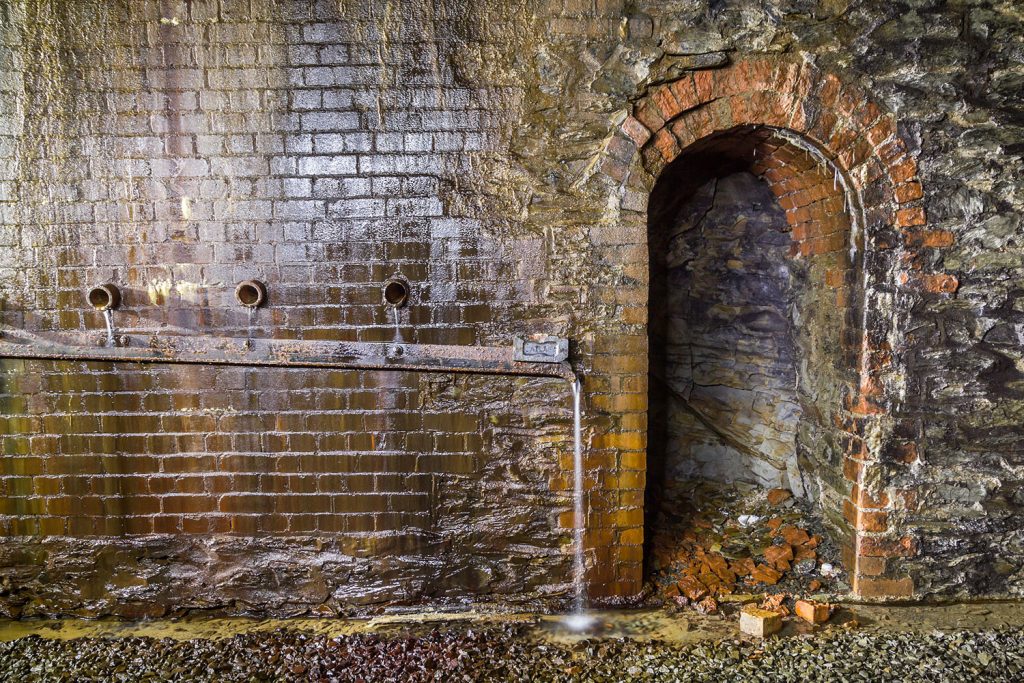
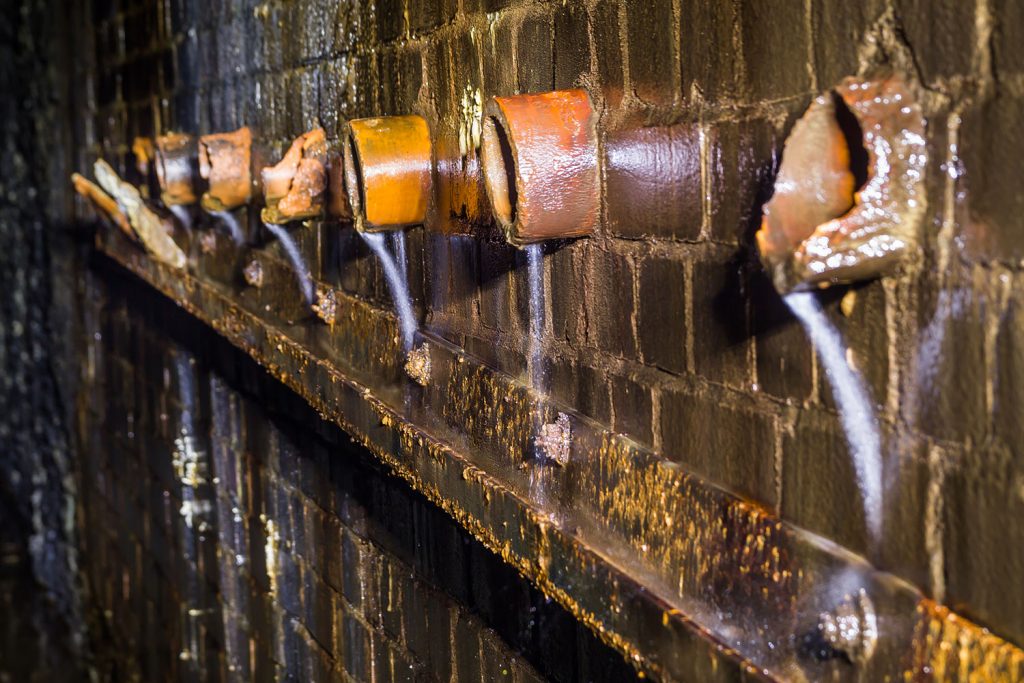
The Elan Valley reservoirs are connected to Birmingham via an aqueduct of 73 miles, around 12 miles of which is tunnelled. Spoil heaps located near Rhayader Tunnel are associated with its construction. The aqueduct crosses the tunnel around 75 yards from the south portal, with 17 feet clearance above the crown. Considerable water ingress is apparent at this location and a management system – formed of two rows of weep pipes and an inclined trough – was installed to channel water into the track drain.
After grouping in 1922, the Great Western Railway made efforts to promote the line and stimulate traffic, with special services and cheap tickets focussed around events such as agricultural shows. The beauty of the landscape through which the line passed was widely recognised as “one of the favourite routes for Welsh tourists who could scarcely find a pleasanter excursion”.
A variety of goods continued to be carried, with timber, stone, steel and sheep trains operating over the line. But the direction of travel was towards closure and 1962 saw the emergence of proposals to lift all three lines converging at Brecon, with the Mid-Wales Railway hosting its last train on 30th December 1962 when a Stevenson Locomotive Society ran a special service in heavy snow, during one of Wales’ worst winters.
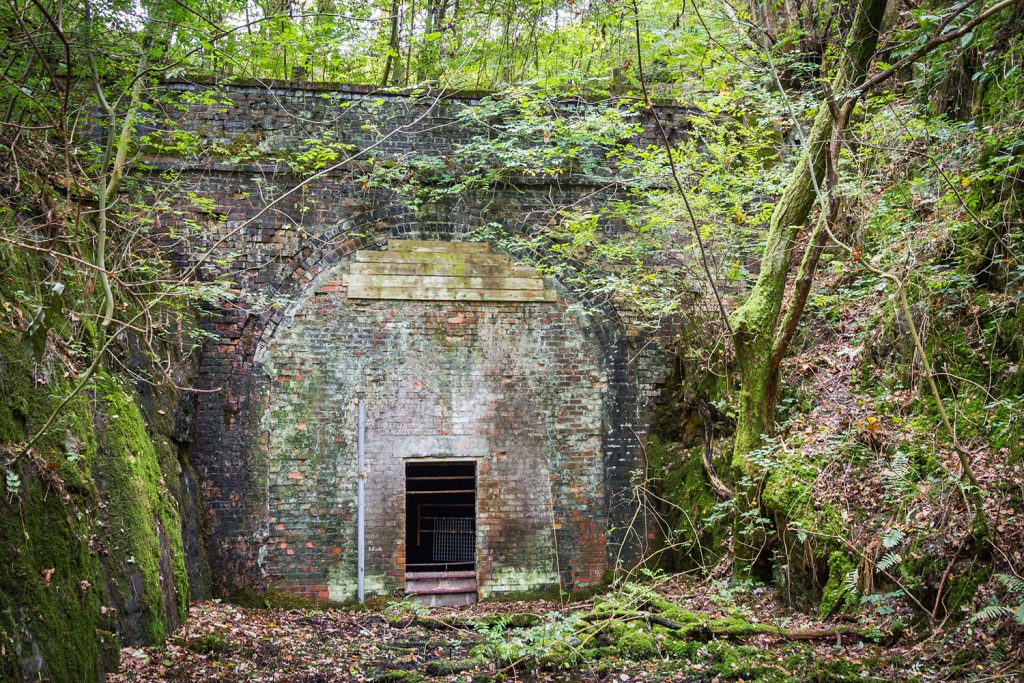
In 1993, Rhayader Tunnel was transferred to the Radnorshire Wildlife Trust as part of a project to provide foraging and roosting sites for the local bat population, with five species subsequently recorded therein. Marteg Tunnel, four miles away, is also managed by the Trust. Neither structure is accessible, but the public is encouraged to visit and explore the nature reserve established above Rhayader Tunnel. Whilst the north portal is Poor and the south portal Fair, the tunnel itself is in generally Good condition. Standing water is found inside the north entrance, fed by open drains located at the toe of both sidewalls. There are brickwork defects at several of the refuges and localised bulging.

 June 2026