




Marteg Tunnel
Marteg Tunnel






The Mid-Wales Railway plotted a circuitous course for 48 miles from an end-on junction with the Llanidloes & Newtown Railway at Penpontbren to Talyllyn Junction, where it joined the Brecon & Merthyr Railway. It was intended to form part of a trunk route connecting the industrial centres of north-west England with the coalfields of south Wales and sea port at Milford Haven, but its ambitions were thwarted by competing Parliamentary proposals whereby 23 miles of line were excluded from the approved scheme. The authorising Act was passed in 1859.
As surveyed, the single track would have a challenging maximum gradient of 1 in 77 and sharpest curve of 30 chains radius. Responsible for the engineering were brothers Benjamin and Robert Piercy who were pivotal in developing the railway network of north and mid-Wales. Mr Atkinson fulfilled the role of resident engineer, with help from Messrs Wilson, Donaldson and Parkinson who individually managed specific sections of the line.
The first sod was cut on 2nd September 1859 in a field close to Rhayader by Mrs Pyne, a descendent of James Watt, the renowned Scottish inventor, engineer and chemist. She was presented with a spade and wheelbarrow by Messrs David Davies and Thomas Savin, the original contractors. Newspaper reports describe the crowd of 300 people contending with miserable weather, the colourful lunchtime procession taking place “amid the pelting of the pitiless storm”.
The company found it impossible to raise the subscriptions for construction so the contractors accepted shares to cover most of their payment. However, Davies and Savin fell out before work had actually started, with Alexander Thomas Gordon taking over the project. But very little work was undertaken due to ongoing financial difficulties and replacement contractors, Messrs James Overend and John Watson, were appointed on 26th March 1862 to push the job forward.
For much of its length, the railway followed the valleys of the Marteg, Wye and Llynfi rivers. Consequently, the requisite works were comparatively easy, the exception being a number of extensive rock cuttings, a great number of bridges and two tunnels.
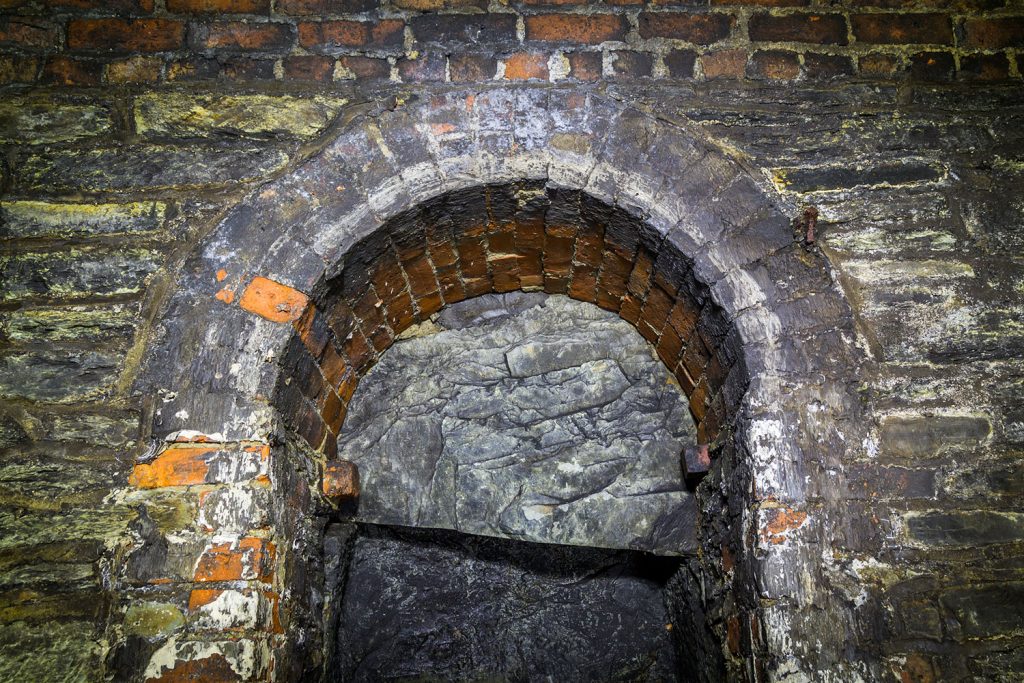
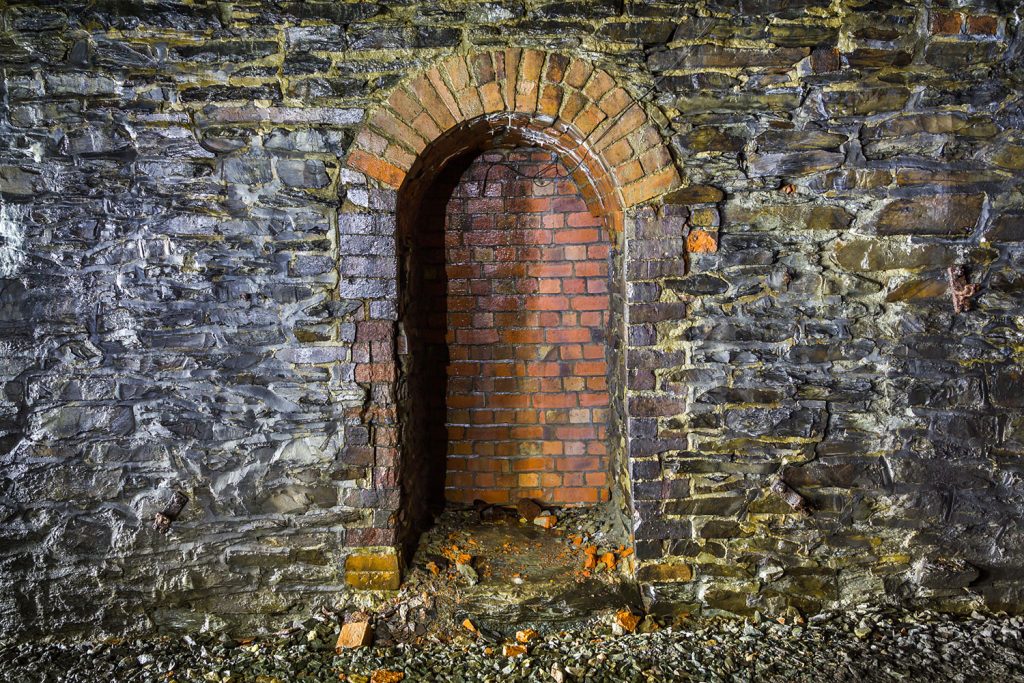
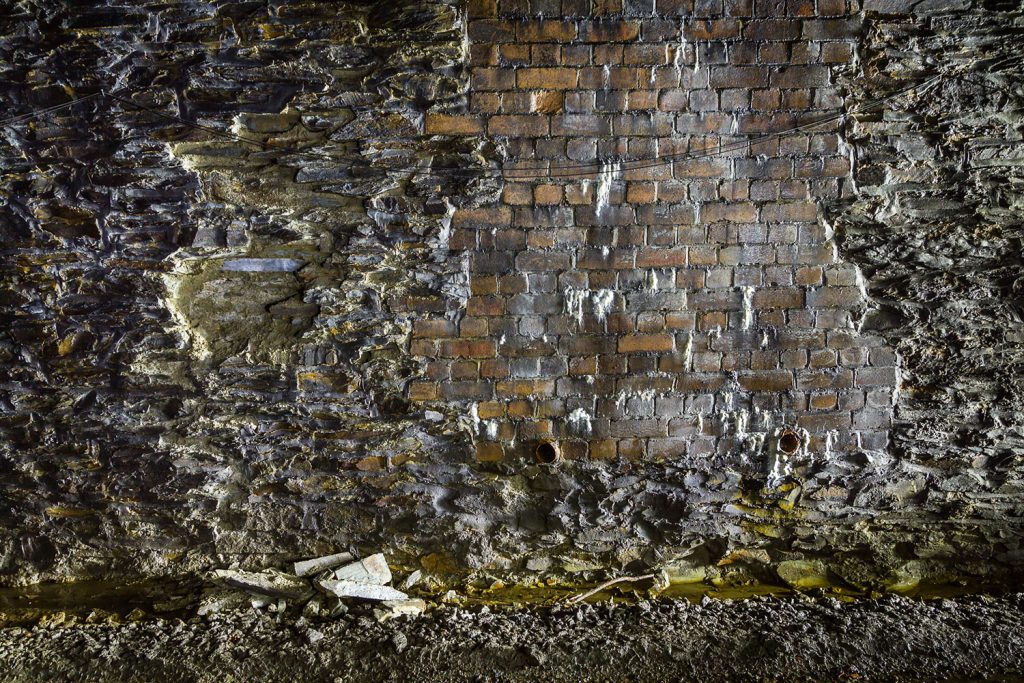
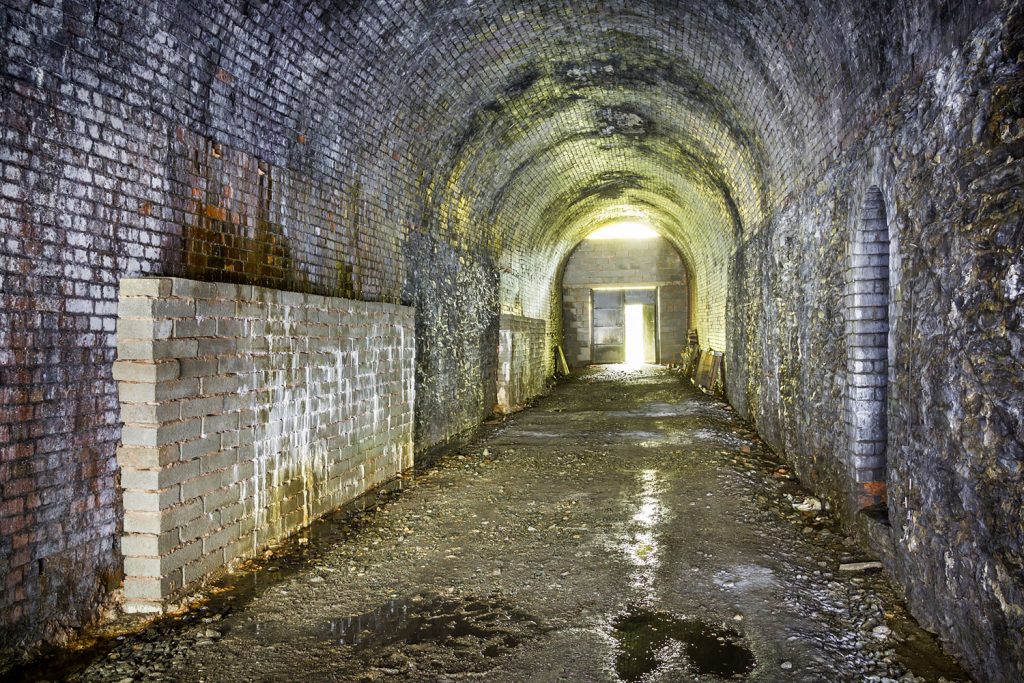
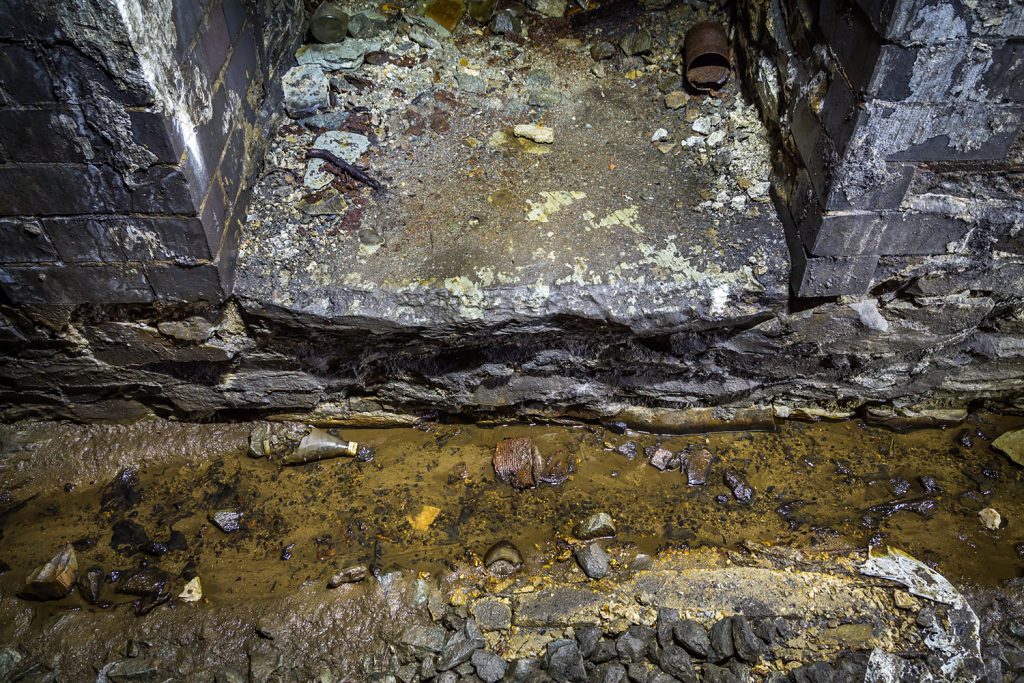
The longer of these tunnels (MLT/70m 22ch) passes through a spur of land two miles west of St Harmon. It measures 372 yards in length and its gradient falls to the south-west at 1 in 73. Also known as Gilfach or St Harmon Tunnel, it is lined throughout with rubble masonry sidewalls in lime mortar and a brick arch. Refuges are provided at nominal intervals of 22 yards (1 chain) – although the actual distance varies significantly – alternating between sidewalls.
The tunnel was driven through mudstone of the Rhayader Mudstones Formation. At both ends, its arch comprises four rings of brick to carry load from superficial deposits overlaying the rock, but the central section appears to be formed of just one brick ring, indicating that its role is not structural.
In February 1863, engineer Benjamin Piercy told shareholders that a construction shaft had been sunk to expedite the excavation work. Historical maps record a small spoil heap around 140 yards from the north-east portal.
In September of the same year, it was reported that the Board of Trade inspector had instructed the engineer to line Marteg Tunnel throughout, despite it being driven through solid rock; this was to prevent any falls of material onto passing trains. It had previously been intended to leave the structure unlined; thus the edict drove a lengthy delay and increase in cost.
On 17th March 1864, two workers sustained severe injuries due to a fall of rock in the tunnel which a local newspaper cited as justification for the structure’s full lining.
Hostility towards Irish navvies amongst their English and Welsh counterparts spilled over into violence on 3rd May 1864, amidst rumours that the contractor was treating local workers less favourably. A group of miners employed on the excavation of Marteg Tunnel were drinking in a public house at nearby Gamallt, when the subject of how the Welsh were treated in Newry (Northern Ireland) became a talking point.
They collectively decided that every Irishman engaged on the tunnel works should be expelled, and this was immediately put into action, with some of the victims “carrying with them unmistakable evidences of the rough kind of treatment they had received.” One man was discovered hiding in a haystack, from where he was removed, abused and pushed into a brook.
The following day, an organised band of English and Welsh navvies – more than 200 in number and armed with staves – proceeded along the line, driving every Irishman out of town, after first escorting them to the contractors’ office to collect any wages due. It was reported that “the streets were completely in the hands of the mob.” One Scottish worker was mistakenly subject to a severe attack and another, from Somerset, was also beaten when he refused to give his country of origin. The rioters returned to work on the Tuesday.
Colonel Yolland from the Board of Trade inspected the line on 15th August 1864. Whilst expressing general satisfaction, he concluded that remedial works were needed before the line could be safely opened to passengers.
However, locals turned out in large numbers to celebrate the ceremonial opening of the line on 23rd August 1864 when a 14-carriage demonstration train ran from Llanidloes to Brecon, a journey which started at noon and took two-and-a-half hours. Once there, a dinner “on a very liberal scale” was served at the Castle Inn.
Goods services began on 1st September, with public passenger traffic introduced on 21st September.
From the outset, an intermediate connection was established with the Hereford, Hay & Brecon Railway at Three Cocks Junction, whilst a chord line to the Central Wales Railway was laid near Builth Wells, opening in 1867.
The flow of goods traffic over the line was initially modest, with the Mid-Wales Railway unable to compete with the collective forces of the Great Western and London & North Western. Traffic in the second half of 1865 amounted to 12,000 tons, yielding about a quarter of the company’s gross income. Figures for the first half of 1865 showed that working expenses of £6,550 represented 58% of receipts, considerably more than the 46% national average.
A receiver was briefly appointed in 1879, the company being unable to pay the interest on its debts. In 1887, operation of the line was transferred to the Cambrian Railway, an arrangement which proved so successful that the two companies merged in 1904.
In 1892, Birmingham Corporation confirmed plans to dam the Elan Valley to meet some of the city’s water needs. The huge scale of the civil engineering works required rail access for the movement of men, materials and equipment, and a 33-mile network of lines had been completed by 1896 to serve four worksites. The line diverged from the Mid-Wales Railway at a junction just to the south of Rhayader Tunnel where a 40-lever signal box was erected, together with nearby exchange sidings. Construction work continued until 1906.
On the morning of 27th June 1906, a gang of four men were about to start work on the line 50 yards from the south-west portal of Marteg Tunnel. When a goods train approached, one of the workers – positioned at the far end – displayed a red flag whilst the others endeavoured to remove a trolley – which came in two sections – from the line. The driver made an emergency brake application, but the rails were wet and the train heavy, comprising 22 wagons and a guard’s van.
One part of the trolley had been removed and all the men were standing clear as the train emerged from the tunnel. Then, experienced ganger Thomas Morris went back onto the track in an attempt to move the trolley’s wheeled base. He was struck by the train – which by this time was only travelling at 6-7mph – and left “fearfully mangled”, with his left leg severed below the knee; his skull and right arm were also fractured, whilst the ribs on the right side had been pushed into Morris’ heart. The 59-year-old died within a minute.
In late-March 1914, a man and woman were the only occupants of a carriage which was part of an afternoon passenger service heading north from Rhayader. As it passed through Marteg Tunnel, the woman heard a loud crash of glass. On emerging from the darkness, she was shocked to find that her companion – who had been sitting in a corner seat – was missing and the door had been wrenched from its hinges.
The incident was reported at St Harmon and the line searched by the local ganger. The door was located inside the tunnel; 50 yards further on, William Stallard was found walking along the line, shocked, bruised and with a broken finger, but otherwise unscathed.
After grouping in 1922, the Great Western Railway made efforts to promote the line and stimulate traffic, with special services and cheap tickets focussed around events such as agricultural shows. The beauty of the landscape through which the line passed was widely recognised as “one of the favourite routes for Welsh tourists who could scarcely find a pleasanter excursion”.
A variety of goods continued to be carried, with timber, stone, steel and sheep trains operating over the line. But the direction of travel was towards closure and 1962 saw the emergence of proposals to lift all three lines converging at Brecon, with the Mid-Wales Railway hosting its last train on 30th December 1962 when a Stevenson Locomotive Society ran a special service in heavy snow, during one of Wales’ worst winters.
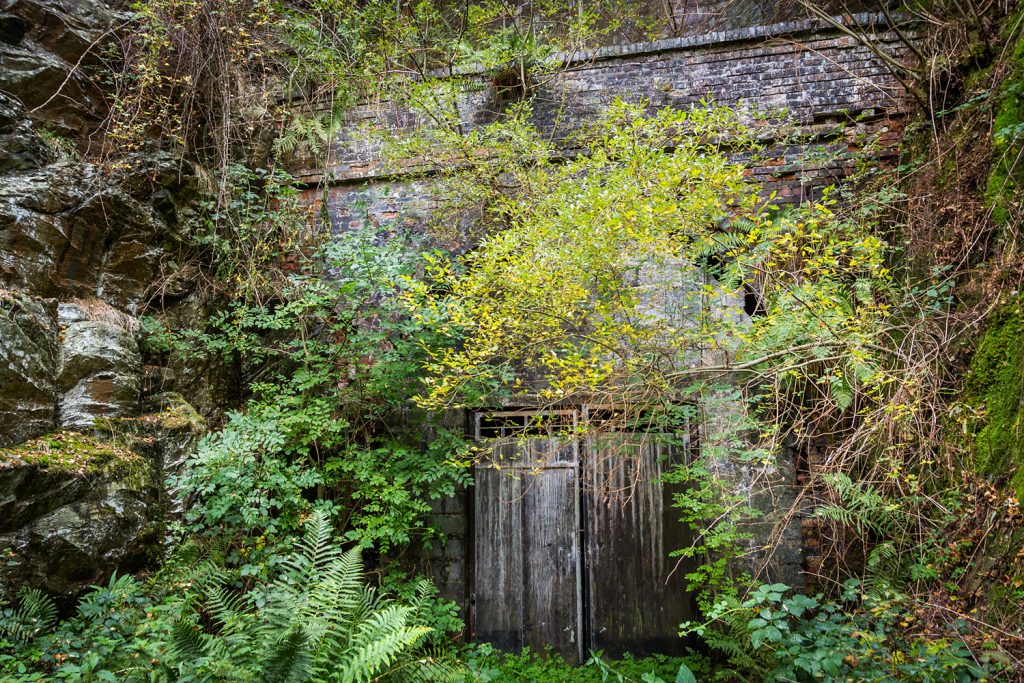
In 1993, Rhayader Tunnel, four miles further south, was transferred to the Radnorshire Wildlife Trust as part of a project to provide foraging and roosting sites for the local bat population, with five species subsequently recorded therein. Marteg Tunnel is also managed by the Trust. Neither structure is accessible, but the public is encouraged to visit and explore the nature reserve established above Rhayader Tunnel.
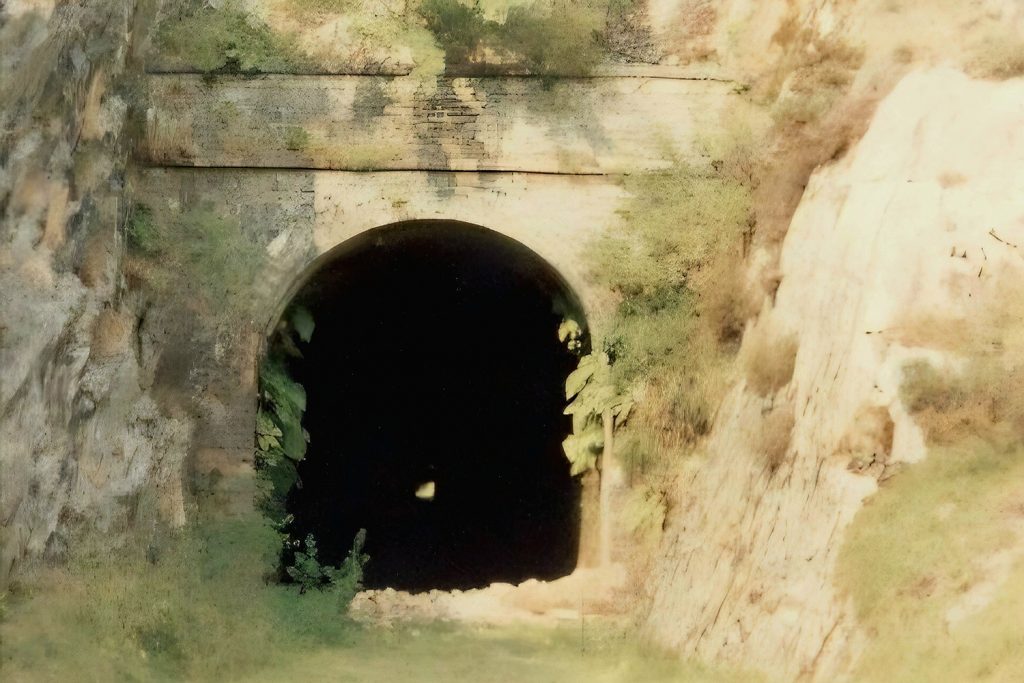
Whilst the north-east portal is Fair and the south-west portal Poor, the tunnel itself is in generally Good condition. There is localised brickwork spalling in the arch and patch brick repairs to the sidewalls. At the north-east end, two short additional sections of blockwork wall have been erected against the north-west sidewall.
The tunnel supports the road between St Harmons and the A470, with an estimated 33 feet of overburden where it crosses the tunnel 37 yards from the south-west portal and 50 feet of overburden where it crosses 87 yards from the north-east portal.

 May 2026